Less bending and easier tending, especially with the 600mm and 800mm heights.
Back to garden beds
A practical start
Grow something good.
Raised beds make productive gardening easier to reach, easier to organise and enjoyable in spaces large or small. Here’s how to give yours a healthy start.
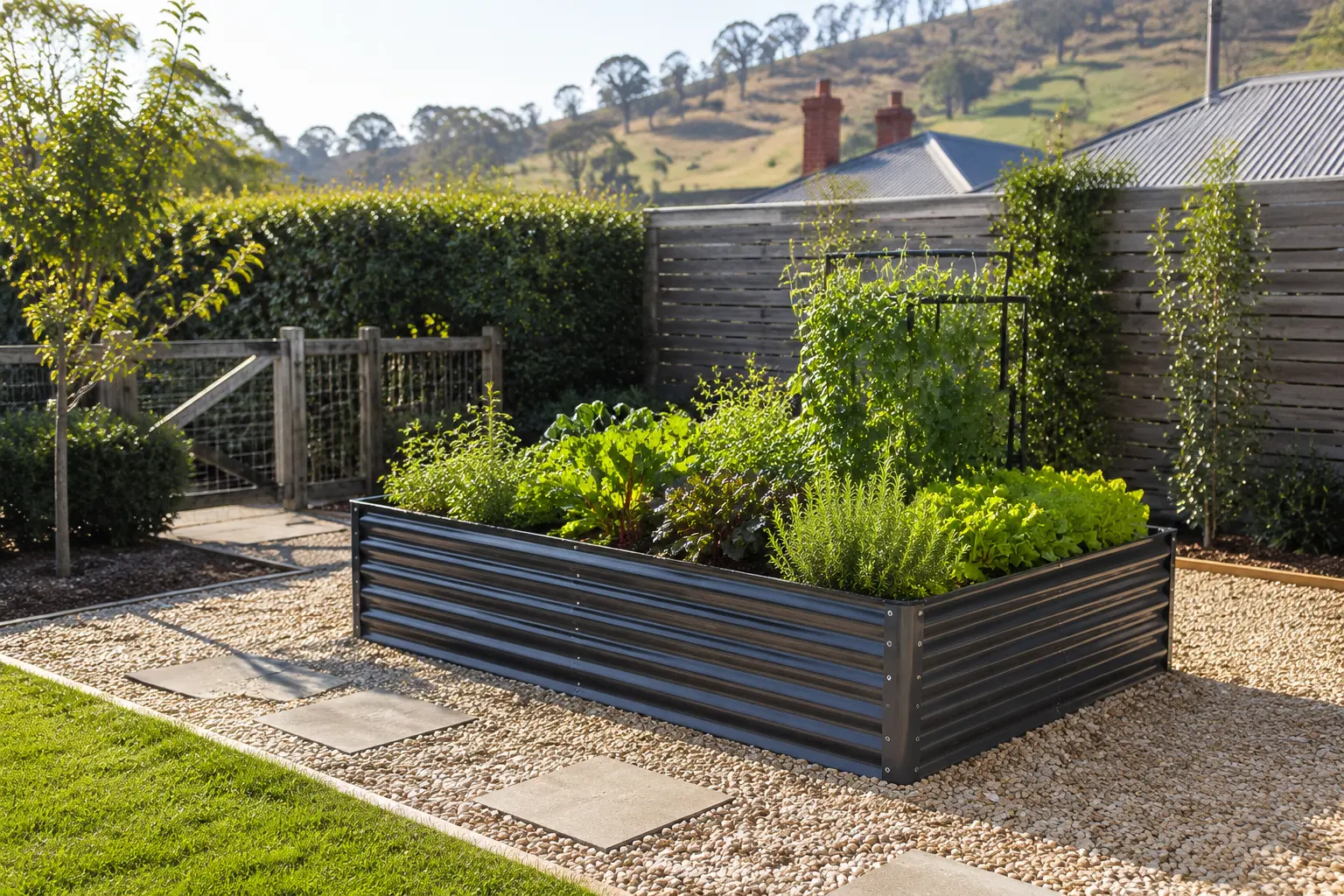
Why raise the garden?
Good for plants. Good for gardeners.
Start with a growing mix suited to vegetables instead of relying on the existing ground.
Raised soil can drain more freely when the bed is installed on a suitable base.
Defined edges keep paths clear and make crop rotation and maintenance easier.
Set up for success
From empty bed to first harvest.
01
Choose a sunny position
Most vegetables and herbs grow best with at least six hours of direct sun. In warmer, exposed gardens, a little afternoon shade can help leafy plants during hot weather.
Watch the spot for a full day before placing the bed.02
Allow for wind and access
Tasmanian gardens can be breezy. A sheltered position helps young plants, but keep enough airflow to reduce damp foliage. Leave walking room around every side you plan to reach.
Keep hoses, gates and wheelbarrow access in mind.03
Make drainage easy
Raised beds need to drain freely. Place them on level, well-drained ground and do not seal the base. On soil or lawn, remove persistent weeds first. On hard paving, make sure water has a clear escape path.
A raised bed should hold soil—not standing water.04
Fill with a good soil blend
Use a quality vegetable-growing mix with compost for nutrients and organic matter. Avoid filling the whole bed with dense garden soil, which can compact and drain poorly.
Expect fresh soil and compost to settle a little.05
Match depth to the crop
Leafy greens and many herbs have relatively shallow roots. Tomatoes, climbing beans and root vegetables appreciate deeper soil. The 400mm bed suits many everyday crops, while taller beds improve access and provide more soil volume.
Choose height for comfort as well as plant roots.06
Plant for the season
Group plants with similar water and sunlight needs. Give large crops room to mature, put taller plants where they will not shade smaller ones, and follow local planting times for your part of Tasmania.
A few healthy plants usually outperform an overcrowded bed.Water wisely
Check the soil, not just the calendar.
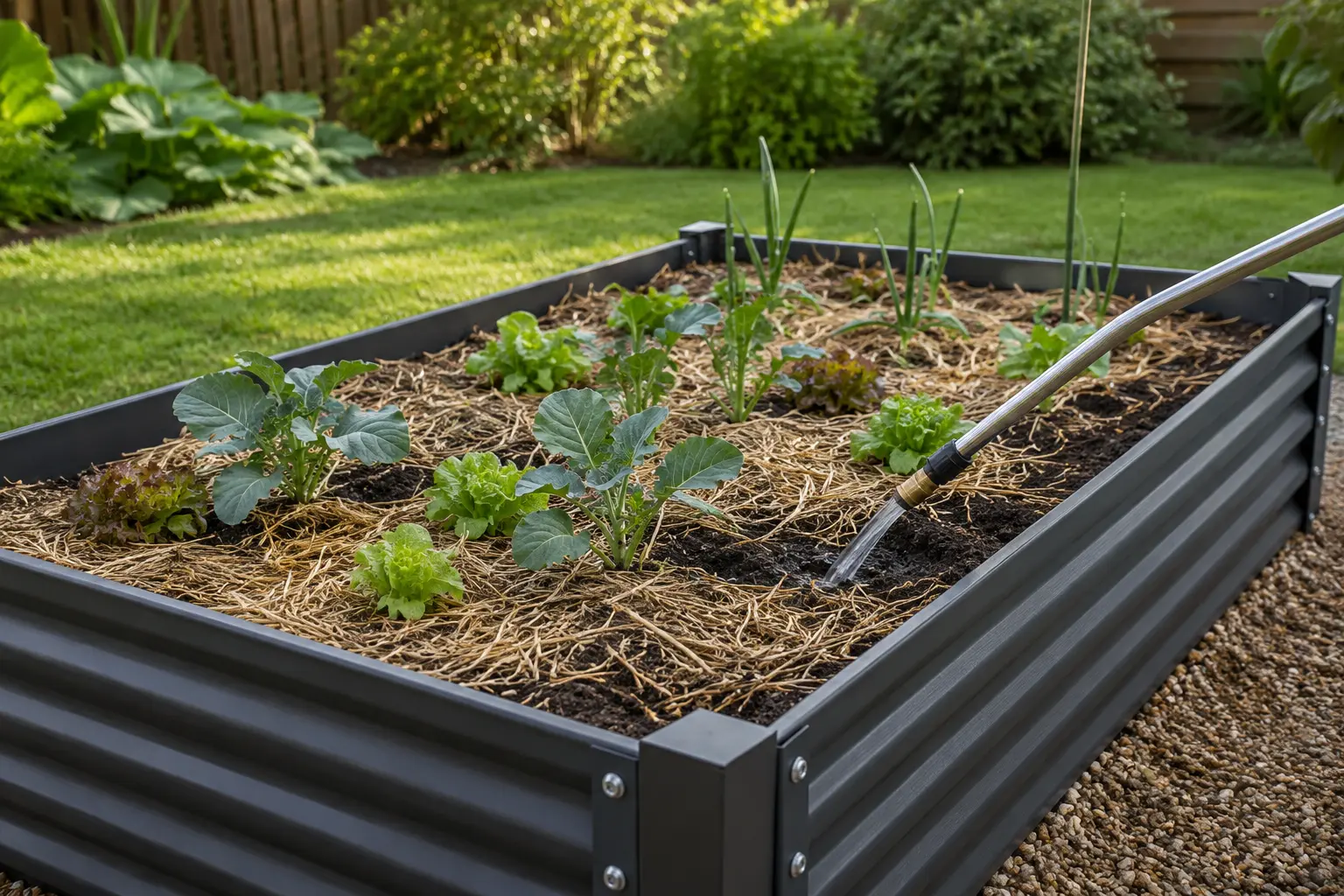
Raised beds may dry faster than surrounding ground, particularly in warm or windy weather. Push a finger a few centimetres into the soil: if it feels dry at that depth, it is time to water.
- Water deeply rather than giving frequent light sprinkles.
- Water near the soil to keep foliage drier.
- Add mulch after planting to slow moisture loss and suppress weeds.
- Check pots and young seedlings more often during hot weather.
Made in Shearwater
Ready to plan your patch?
Choose a standard bed or set your own dimensions, then see the colour, soil volume and price update.